
At RomeCup 2026, the winning Roll Cloud projects showcase a generation that uses the cloud and artificial intelligence to devise practical solutions for health, inclusion, poverty and sustainability
Artificial intelligence is now part of the daily lives of the younger generations. This is also confirmed by the EU Kids Online 2026 survey, which found that in Italy, 89 per cent of children and teenagers aged between 9 and 16 had used generative AI in the past month. But at the RomeCup 2026, the finalists of Roll Cloud. Working in the Cloud demonstrated a further, decisive step forward: not AI as a mere shortcut (a sort of ‘new Google’), but as a design environment for tackling real-world problems.
Organised by the Fondazione Mondo Digitale ETS as part of Opening Future – the joint project of Google Cloud, Intesa Sanpaolo and TIM Enterprise – the programme guided secondary school and university students in using cloud computing and artificial intelligence to devise practical solutions for health, inclusion, poverty and sustainability. The programme culminated in Hack4SocialAI, the national hackathon hosted at Sapienza University of Rome during the RomeCup. The teams worked on four major areas of social impact – health, inclusion, poverty and sustainability – designing digital prototypes capable of linking data, needs, services and participation.
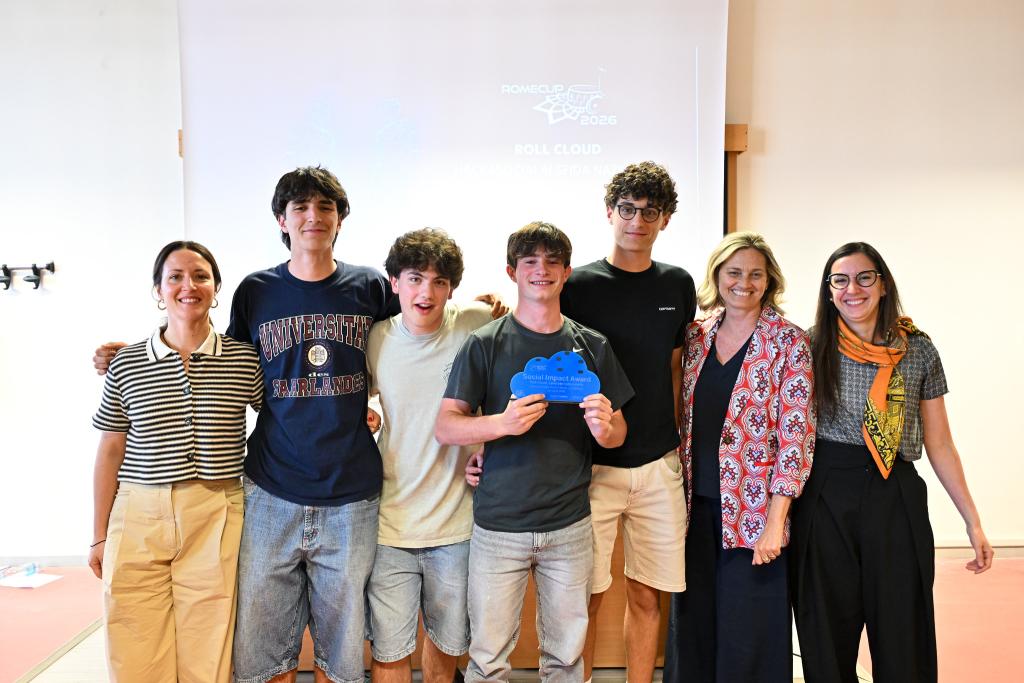
The winner of the Social Impact Award was Bee More Sustainable, a project by the Pellico-Peano secondary school in Cuneo (Giorgia Corrieri, Magda Lagzouli and Beatrice Sinatra). The team chose to address a specific environmental crisis: the decline in bee populations and the need to support beekeepers’ work. The solution is a platform that connects donors and beekeepers, facilitating the raising of funds, the care of beehives and greater awareness of the value of biodiversity. The project perfectly embodies the spirit of Roll Cloud: using technology to build networks. In this case, digital technology does not replace human action, but rather empowers it, creating a bridge between citizens, producers, local communities and the protection of the ecosystem.
The special mention in the health category went to Mai Solo, developed by computer engineering students from Roma Tre University – Gabriele Crociani, Alessandro Pasetti and Alessia Castagnedi. The project was created to support elderly people, those who are frail, or those with health conditions requiring monitoring. It integrates wearable devices, a mobile app and predictive artificial intelligence to monitor vital signs, recognise critical signals and trigger timely alerts. The idea is simple yet powerful: not to leave people alone during their most vulnerable moments. Through smartwatches, apps, predictive analytics, facial recognition and voice tone analysis, the system aims to strengthen prevention, safety and care, whilst also involving family members and carers.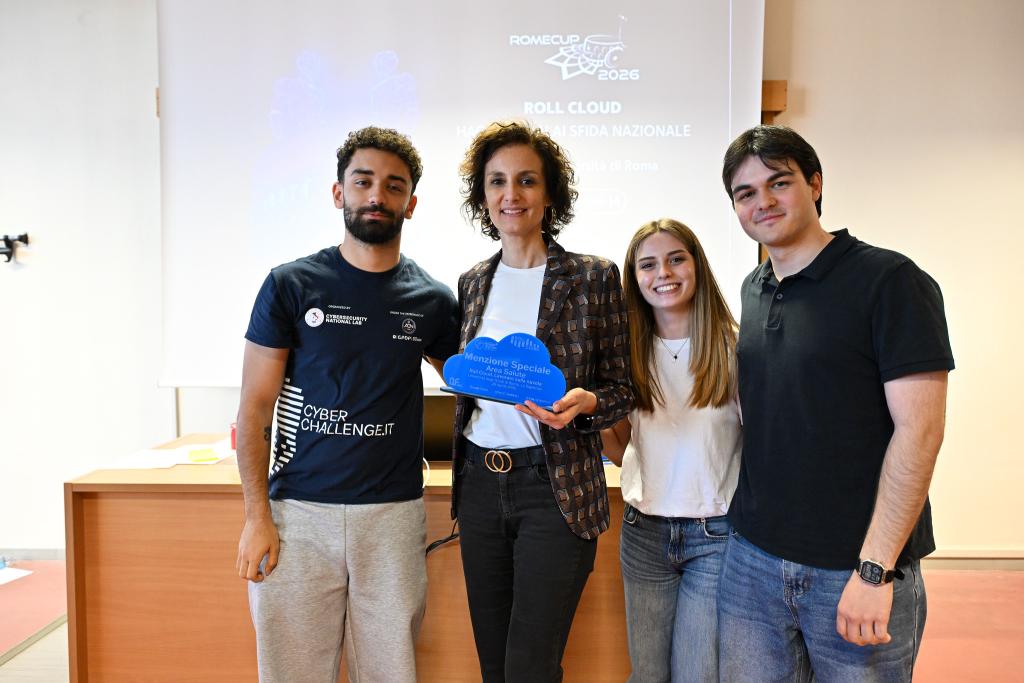
The special mention for the inclusion category was awarded to Info Bridge from the Ascanio Sobrero Institute in Casale Monferrato (Francesco Aloisi, Federico Brunoro, Alessandro Miftode and Daniele Mici). A proposal designed to support migrants through the initial stages of integration.
The project acts as an information hub to facilitate access to essential services, reduce initial difficulties and promote independence, integration and social cohesion. In this case, the technology addresses the most delicate stage: initial orientation. Knowing where to go, who to turn to, what services are available and what steps to take can make the difference between isolation and inclusion.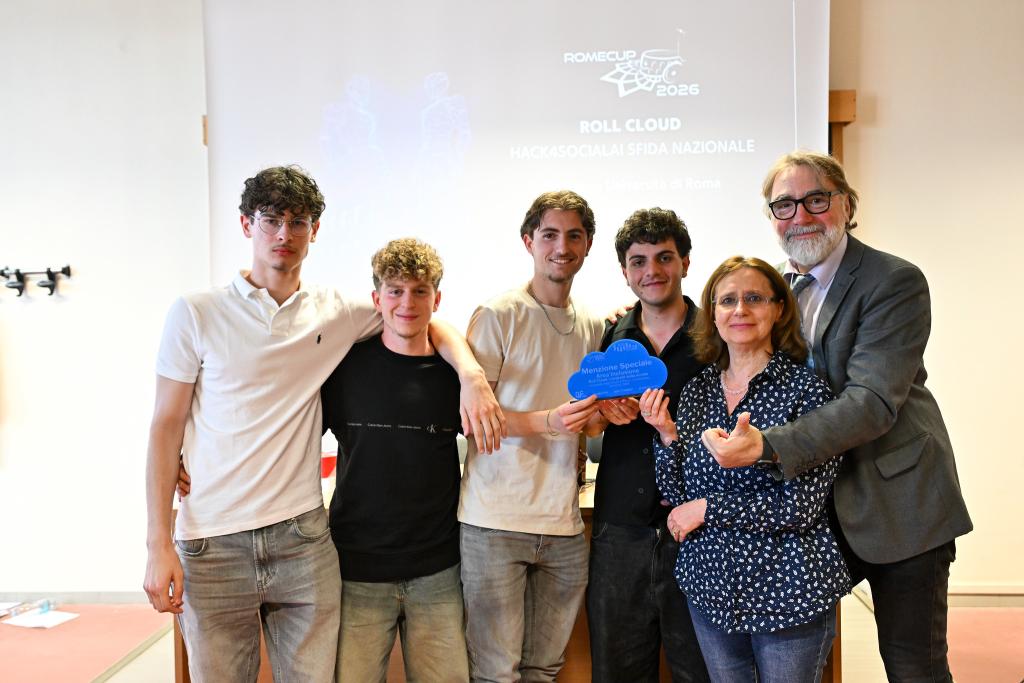
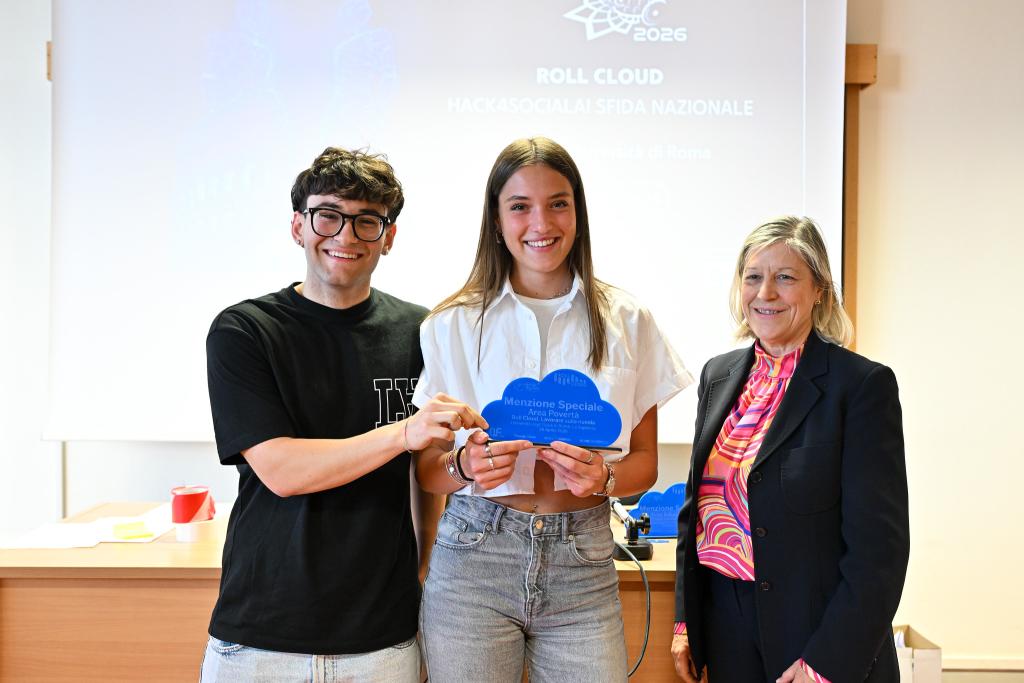
In terms of economic vulnerability, the special mention for the poverty category went to Orizzonte, a project by the University of Turin (Davide Bambino, Carola Mulato and Selma El Kabbouri), dedicated to supporting vulnerable individuals and households. The aim is to identify needs, facilitate access to resources and opportunities, and offer support geared towards inclusion. Here too, a common thread emerges among the award-winning projects: artificial intelligence is not viewed as a shortcut, but as an infrastructure connecting people, needs and services. It is a useful technology when it makes vulnerabilities more visible and solutions more accessible.
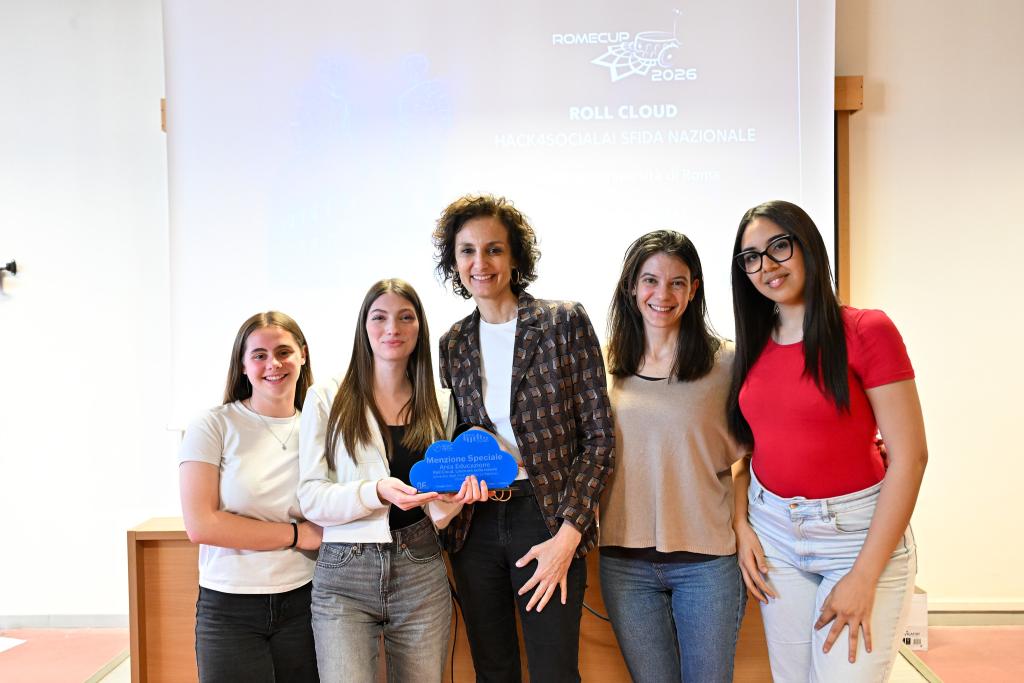
The special mention for the education and sustainability category was awarded to Le Superchicche from the Vittorio Alfieri High School in Asti (Giorgia Corrieri, Magda Lagzouli and Beatrice Sinatra), an app that promotes the sustainable exchange of clothes. Users can earn points by reusing clothes and convert them into seeds, which are then planted by a partner organisation. The project combines the circular economy, community involvement and environmental impact. An everyday action, such as swapping an item of clothing, becomes part of a wider process: reducing waste, promoting responsible behaviour and generating a tangible benefit for the local area.
From biodiversity to health, from hospitality to poverty, right through to the reuse of clothes, Roll Cloud’s prototypes convey a very clear vision of innovation: technology has value when it helps us to better understand needs and to trigger shared responses. This is also the message at the heart of the in-depth feature “AI and the common good”, published to mark the RomeCup. The cloud and artificial intelligence are not merely technical tools, but design environments in which young people can learn to ask questions, analyse problems, devise services and assess consequences. This is why Hack4SocialAI was not just a hackathon. It was an exercise in technological citizenship. The teams tackled complex problems, built prototypes, presented solutions to a panel of judges and discovered that innovation requires not only technical skills but also the ability to listen, a sense of responsibility and the capacity for collaboration. The value of Roll Cloud lies precisely in this partnership between education, business and social impact. Bringing cloud computing and artificial intelligence into schools and universities means giving young people the tools to understand the digital transformation, but also to steer it towards goals of shared well-being.
The award-winning projects at RomeCup 2026 show that the younger generations are not merely asking to use more advanced technologies. They want to understand how to put them at the service of people, the environment and communities. This is where truly responsible artificial intelligence can emerge: not from the technology itself, but from the questions we choose to ask it and the problems we decide to tackle together.


