

Women’s Intelligence in AI: an interview with architect Giovanna Padellaro
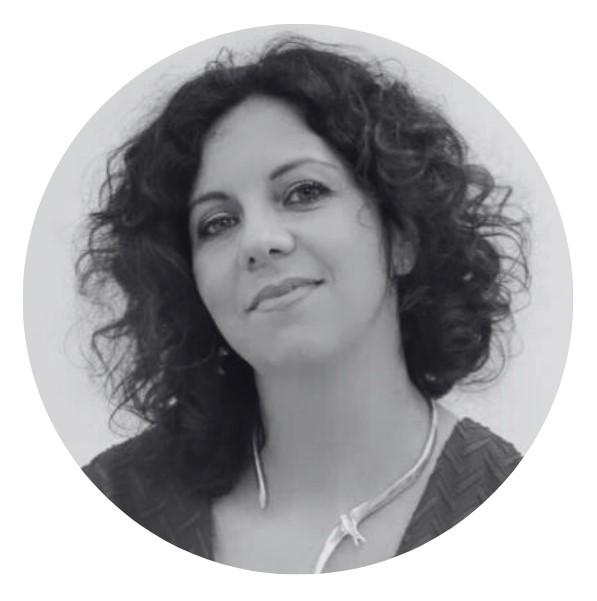
“I was born with a pencil in my hand and I want to understand how to make the most of it thanks to AI”: this is how architect Giovanna Padellaro described the motivation that led her to enrol on the “Women’s Intelligence in AI” programme, organised by the Fondazione Mondo Digitale with the support of the Centre for Public Impact as part of the Google.org AI Opportunity Fund.
“I work in a team as a project coordinator alongside colleagues who are much younger than me. I’d like to have the skills needed to understand the language of AI and keep up with the times,” she added. Ten years ago, she chose to merge her practice into a professional partnership specialising in design and project management for both the public and private sectors. “I coordinate the construction sector team, a role that is fully in line with my creative streak, which blends perfectly with the technological aspect.” Giovanna comes from a family that has always been active in the technical and scientific fields, with her father and sister both being engineers.
Having taken part in the “Intelligenze al femminile” training courses, looking back, how would you describe your relationship with AI before the training programme?
I didn’t yet realise just how much artificial intelligence could assist me, both with more bureaucratic tasks and with certain more specific aspects of my work. Before, I only used it as an enhanced search engine or as a lexical aid when drafting documents. A basic use driven by concerns about privacy breaches. At a certain point, however, I also realised that it was very useful for drafting technical reports. I noticed that it greatly simplified searches for legislative references, data and documents.
Which aspect did you want to explore in greater depth?
I wanted to develop my basic approach. First of all, thanks to the course, I was able to gain a clear understanding of what artificial intelligence is and how it works. I learnt how to write prompts effectively, and I started using it as a proper assistant! Today, I use AI to develop presentation strategies, but also as a coach for reviewing projects.
So have you now managed to integrate AI more effectively into your day-to-day work?
Yes, I’ve definitely changed the way I use it. To go into more detail, starting with a technical report submitted to a public body to obtain a permit, I use AI to reword that same report to draft proposals for clients. This makes it more effective to tailor the language to the specific audience. Of course, it’s essential to maintain control of the process and set out the regulatory references in the initial requests. Beyond my profession, it’s useful for drafting texts and strategies for social media. Recently, whilst tackling a particularly demanding refresher course, I started using AI as a study coach. I uploaded some materials and used it to help me draw up a study plan and then request a review phase with questions.
Aside from privacy concerns, have you ever thought that AI might be a dangerous competitor in your profession, as some of your colleagues fear? Have the training courses helped you put these fears into perspective?
I believe that such a fear applies mainly to small-scale projects. For example, for some people who might want to try their hand at architecture, AI could be a useful aid.
But be careful: the approach here risks being simplistic and uncontrolled. If there isn’t a competent and experienced professional to oversee all the output and structure the work, providing the right guidance and checking the data, the final project will certainly not be of high quality. The preliminary analysis phase, as well as the final verification phase, are fundamental. AI is an ally, but be wary of delegating or replacing human expertise.
How do you envisage the professional’s role as the process evolves?
Professionalism and experience are certainly essential. Not least to prevent a certain creative stagnation. We must be very wary of ‘hallucinations’: AI tends to improvise a great deal when it cannot draw on sufficient material or a substantial body of literature on a given topic. I understand that a young person entering the profession might fear that AI could jeopardise their job. But as they gain awareness and experience, they will always be the ones in charge of the work. Design is not about data but about know-how.
What did you appreciate most about the training courses you attended?
Sharing experiences with other female professionals was a real highlight. It led to interesting exchanges, suggestions and different points of view: women aren’t afraid to engage in discussion.
 Interview by Onelia Onorati, press office of the Fondazione Mondo Digitale.


