

A strategic alliance since the first edition in 2007
The link between Sapienza University of Rome and the RomeCup is neither episodic nor merely logistical. It is a structural collaboration that spans almost twenty years of the event's history, intertwining academic research, youth training and international competitions.
In 2022, the RomeCup was hosted at the Marco Polo Building, and in 2026 it will return to the same location. But reducing this relationship to a question of location would be limiting: Sapienza is an integral part of the scientific and cultural ecosystem that has helped the RomeCup grow as a permanent laboratory of innovation.
From the beginning: research takes the field
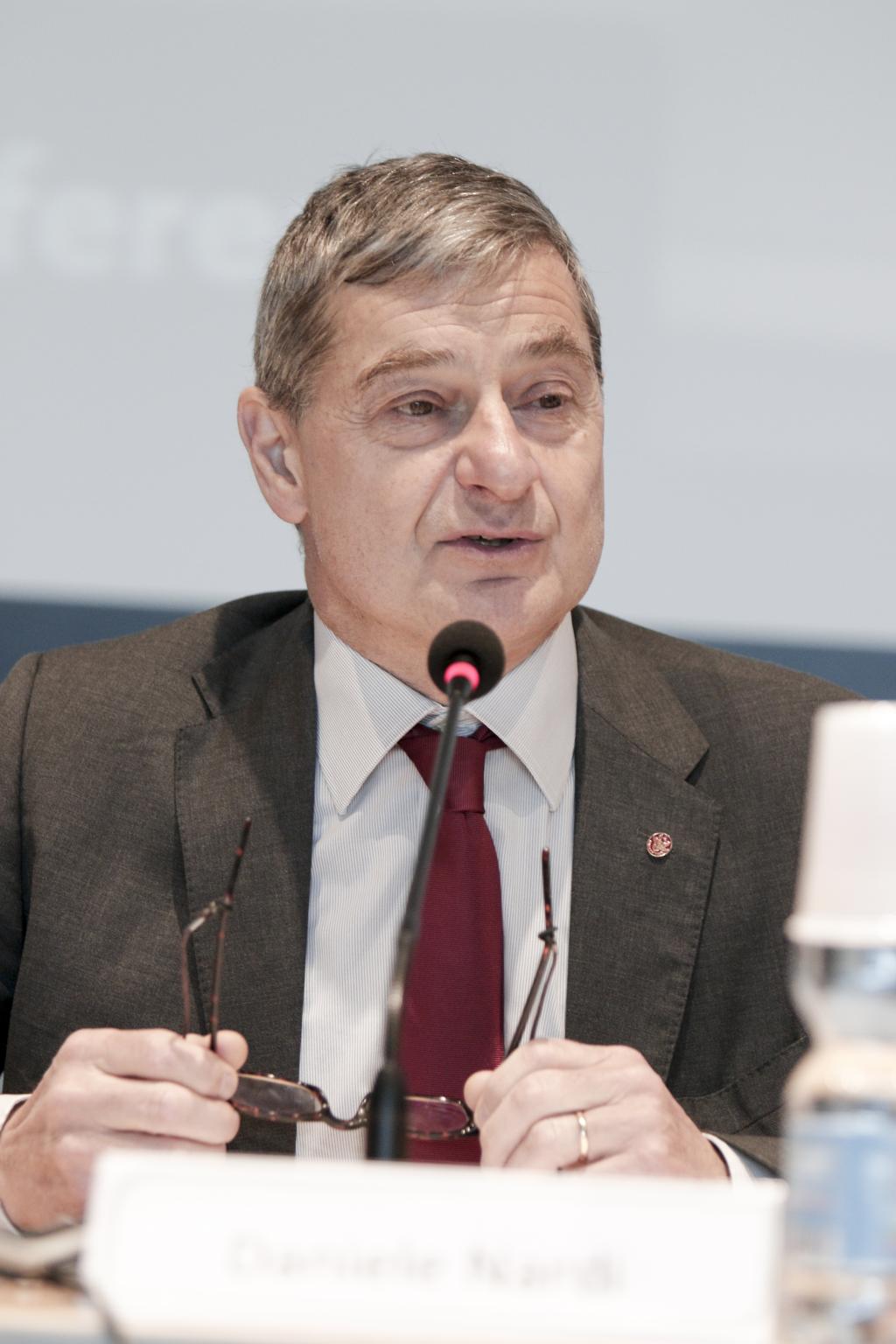
Since the first edition in 2007, with the participation of Professor Daniele Nardi, full professor of Artificial Intelligence, the university has contributed to giving scientific authority to the event, participating in workshops on robotics education and discussions on the educational applications of automation.
Over the years, research groups from the Department of Computer, Control and Management Engineering “A. Ruberti” (DIAG) have accompanied:
- robotics competitions
- working groups on AI and society
- university orientation events
- international dialogue with the RoboCup community
Sapienza has played a dual role: scientific engine and generational bridge between advanced research and schools.
The SPQR team: expertise and entertainment
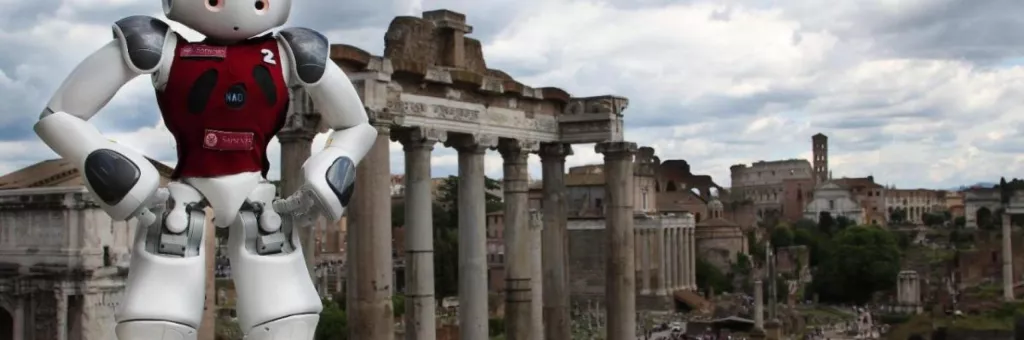
Among the historical protagonists, the SPQR team stands out, led by Daniele Nardi (team advisor) and Luca Iocchi (team advisor), an Italian reference point in RoboCup.
The team's demonstrations during the RomeCup editions have remained in the collective memory: football matches between humanoids, multi-agent coordination and cooperation tests, technical challenges that become public entertainment. A press agency reporting on the third edition vividly describes the scene at the Campidoglio: the silence before the shot, the robot goalkeeper in front of the goal, the ball going out and the researcher putting it back on the field. A match between humanoids that becomes a powerful metaphor for the unpredictability of artificial intelligence. As Luca Iocchi pointed out, the appeal lies precisely in the possibility of error: the fact that a robot can make mistakes makes the scene lively, exciting and never deterministic.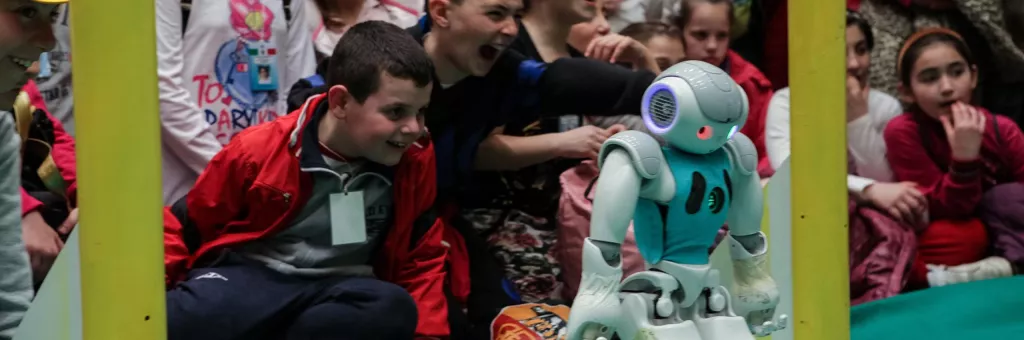
From Sony Aibo to Nao: the evolution of platforms
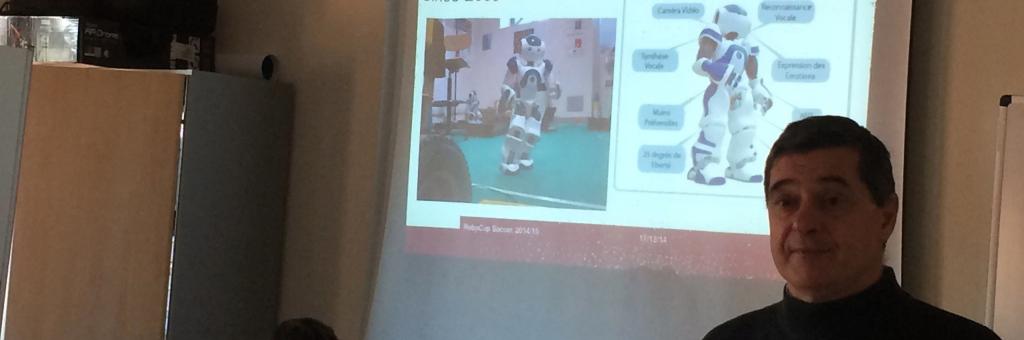
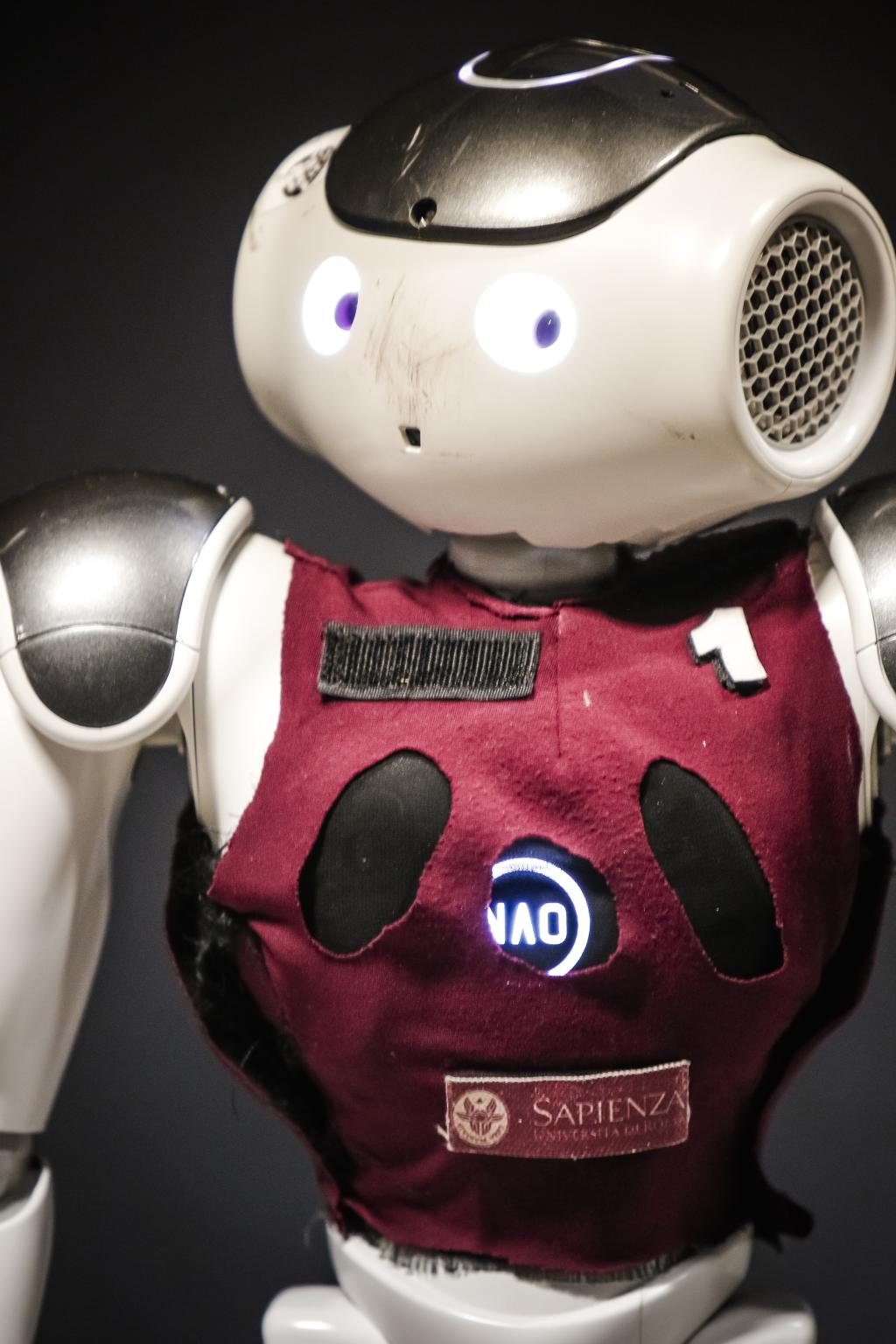
In the first two editions, the competition fields were animated by Sony Aibo quadrupeds, robotic “dogs” programmed and trained with the help of researchers from Sapienza University. Since 2009, the baton has been passed to Nao humanoids, a central platform also in the RoboCup. With Nao, the scene changes: the humanoid body makes identification more immediate and the educational impact stronger.
In the Sapienza laboratories, Nao is used for:
- the study of human-robot interaction
- artificial vision and perception
- motor coordination
- multi-agent cooperation
When these robots take to the field at the RomeCup, they are not simply competition tools: they are the result of years of research that find a space for dissemination and cross-fertilisation in the event.
2014: Nao in goal and Nao as a guide
In 2014, the collaboration took on a symbolically powerful form. For the little ones, Sapienza University students organised a penalty shootout with NAO in goal. The little humanoid stood between the posts and tried to save the children's shots. A simple but highly significant gesture: university research became direct experience, play, wonder. In the same year, Nao also began to be used as a university “guidance counsellor”, capable of interacting with students and accompanying them on their journey of discovery of STEM professions. Robotics thus entered the realm of accompaniment and relationship, anticipating the paradigm of augmented intelligence.
2018: NonniBOT is born, robotics that creates bonds
In 2018, RomeCup introduced creative contests. Among these was NonniBOT, coordinated by DIAG della Sapienza. The focus was clear: to create a robot that could stay at home with grandparents and allow their grandchildren to interact with them remotely.
The contest is coordinated by Paola Ferrarelli together with Luca Iocchi and involves eight schools in a school-work alternation programme, with teams of four to eight students supervised by teachers.
NonniBOT changes the paradigm: from robotics as competition to robotics as a response to a real social need. Technology becomes a bridge between generations, a tool for proximity, a laboratory for technological citizenship.
2022 and 2026: continuity and future
The RomeCup's hospitality in 2022 and 2026 at the Marco Polo Building represents the continuity of a strategic alliance. From the demonstrations of the SPQR team to the humanoid matches in the Campidoglio, from penalty kicks with NAO to social robotics contests, from the pioneering vision of Luigia Carlucci Aiello to the training of young researchers, the collaboration between Sapienza and RomeCup tells a coherent story. A story in which:
- research leaves the laboratories
- enters schools
- animates institutional squares
- builds a human-centric innovation ecosystem
In the context of RomeCup 2026, dedicated to the paradigm of augmented intelligence, Sapienza is not only an institutional partner: it is a co-protagonist of a vision that combines scientific expertise, social responsibility and dialogue between generations.
 Da Attilio Sacripanti, Robotica 2007. Il Mondo della Robotica, la robotica nel mondo, Enea-Tor Vergata, 2008
"Nel Lazio invece, con un progetto di largo respiro, si è pensato di seminare cultura scientifica applicata nelle nuove generazioni e di valorizzare il lato ludico-educativo che la robotica può mostrare ai i ragazzi delle scuole, con il chiaro intento, sul lungo periodo, di formare ed indirizzare verso la tecnica le nuove generazioni di un paese, in cui forse la tecnica è vista più come un bene di consumo che come un azione attiva della vita. la robotica infatti non serve soltanto per imparare a costruire o usare i robot, ma anche per acquisire un metodo di ragionamento e sperimentazione del mondo; implica la combinazione di varie discipline e consente agli studenti di apprendere le scienze in modo stimolante, creativo e coinvolgente. A presentare la prima edizione di RomeCup2007 è stato il presidente della Fondazione Mondo Digitale, Tullio De Mauro, che ha dato il via anche ai lavori degli eventi paralleli: alle 9.30 l’apertura ufficiale della competizione, alle 9.45 l’inaugurazione dell’area dimostrativa e alle 10.00 il workshop con i docenti. La competizione, articolata in categorie (Explorer, Explorer Junior, MiniSumo e Soccer), si svolgerà dalle 10 alle 16. A sfidarsi saranno gli automi progettati e assemblati dagli studenti. I “robot esploratori”, ad esempio, dovranno muoversi “da soli” in un labirinto per un tempo prefissato. Ai robot calciatori (Soccer) sarà chiesto di scendere in campo in squadra: una palla speciale in grado di emettere raggi infrarossi consentirà “palleggi, passaggi e goal”. Al termine della competizione, le consultazioni della giuria e la proclamazione dei vincitori. A consegnare i premi sarà il sindaco di Roma, Walter Veltroni. In contemporanea alle competizioni della mattina si svolgerà il seminario per docenti “La Robotica nella didattica - Esperienze a confronto” (Sala del Carroccio, ore 10-13).
Ha aperto i lavori il direttore generale della Fondazione Mondo Digitale, Mirta Michilli. A fare il punto sullo stato dell’arte della robotica e della didattica dell’automazione saranno Giammarco Verruggio, presidente della Scuola di Robotica, e Daniele Nardi, professore ordinario di Intelligenza artificiale all’Università La Sapienza di Roma. Saranno anche presentate le esperienze di eccellenza realizzate dalle scuole italiane a Roma, Pisa, Catania, Latina, Grosseto".


