
Make the Most of the Internet: the testimony of Maria Grazia Giannoccaro, a primary school teacher
In the Make the Most of the Internet courses – the training programme promoted by the Fondazione Mondo Digitale ETS with the support of Google.org – teachers explore tools and methodologies to guide pupils towards a creative, informed and critical use of technology. The aim goes beyond the acquisition of practical skills: it involves building competencies that are useful for understanding a rapidly changing world, navigating information, recognising the limitations of digital tools and using them to design, collaborate and solve problems.
It is within this context that the experience of Maria Grazia Giannoccaro, a primary school teacher at the Marconi Oliva comprehensive school in Locorotondo (Bari) – a school led by headteacher Grazia Convertini – fits. In courses dedicated to ‘augmented teaching’, Maria Grazia has explored applications of artificial intelligence capable of making learning more engaging, personalised and inclusive, without compromising on the teacher’s guidance or the development of critical thinking.
From creating narrative maps of the local area with NotebookLM to experimenting with artificial intelligence models using Teachable Machine, right through to using Gemini for creativity and problem-solving, every activity has become an opportunity to understand how these technologies work, evaluate their outputs and transform them into tools that serve the classroom and the community.
“During the Map Your Village session with trainer Daniela Pieraccini, we discovered how NotebookLM can be used as an augmented research notebook to guide pupils in collecting and analysing local sources, texts, images, interviews and stories, and transforming them into exploratory narratives and geolocated routes that showcase the local area. The session with Roberto Raspa also provided an excellent opportunity to learn how to use Google’s Teachable Machine to understand how AI works and how to critically evaluate its outputs, exposing any errors. We saw first-hand how technology enables us to build artificial intelligence models together with students, training the machine with images and sounds, and laying bare any biases. Finally, in the session led by Lara Rollo, we learnt to master Gemini as a teaching tool for creativity and problem-solving, whilst always paying close attention to ethical considerations”.
The programme offered an educational activity that effectively combined the use of technology with critical thinking, providing practical tools to be introduced in the classroom to give pupils further food for thought. “Thanks to Notebook, I could now teach pupils to create an interactive map of their own town, reconstructing its history for the benefit of those who are unfamiliar with it,” adds Maria Grazia. “Furthermore, the feedback we teachers provide in class encourages pupils to organise their own study at home in the way and at the times that suit them best.
Technology is multimodal; it allows content to be presented through various tools, such as podcasts, videos, quizzes and flashcards, thereby demonstrating the ability to personalise learning in line with the principles of Universal Design for Learning”.
The topic covered in class is important for the subsequent phase of independent study at home. “We can create a video to introduce a new topic and make it engaging. Alternatively, we can create revision sheets before moving on. This extreme flexibility also serves as a way to bring out the strengths of young pupils, breaking down traditional contexts where a class is given a single task to complete, which fails to value individual differences. The teacher has the opportunity to bring out the unique strengths of each pupil and what each has to offer the class community!”
This is an inclusive approach to learning, which allows time for experimentation and further exploration at home. The most delicate work takes place in the classroom: “The content is always shared because it is developed on platforms that the teacher always has at their disposal. The best way to introduce young people to technology is to create educational games, helping them to see the practical value of what they’re using. The world is moving very fast, and we teachers are helping to spread tools for understanding reality, which are of great value.”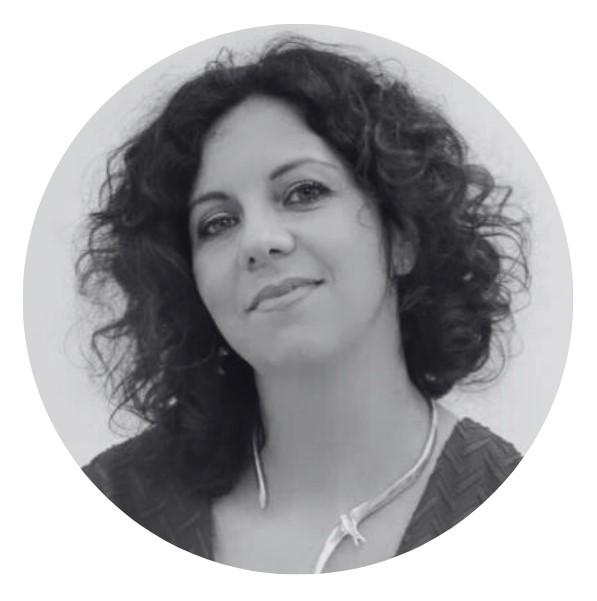 Interview by Onelia Onorati, press office of the Fondazione Mondo Digitale.


