
Suburb View: Roman high school students’ experience with artist Giacomo Lion
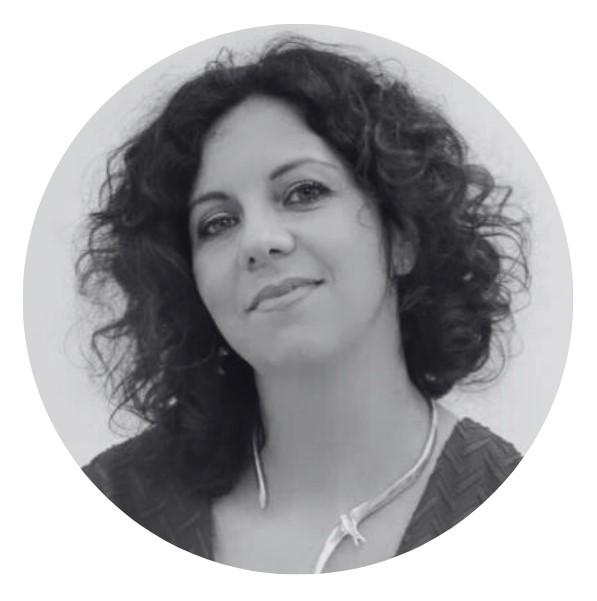
Giacomo Lion is a creative designer who expresses his art through various media. He is a visual artist, an interior designer and a consultant specialising in communication and brand identity. Today, having explored the various realms of creativity for over 15 years whilst working with agencies, the third sector, schools and the business community, he says of himself: “I design visions, create forms, seek meaning”.
He was tasked with guiding, without over-directing, the work of the students at the Confalonieri De Chirico art school in Rome for the Suburb View project. The final result is a video celebrating the 25th anniversary of the Fondazione Mondo Digitale, a creative work capable of interpreting history in a dynamic and participatory way. Here is how he described the creative process to us, which proved to be an extraordinary opportunity to imagine space and time in a different way. The students truly felt like the protagonists of a story that is on display from 25 May to 14 June on the walls of their city [see the news item Urban visions for the right to knowledge].
What is the new vision of urban space and community that has emerged through working with the young people and citizens involved?
What has emerged is that urban space is not just a place to pass through, but a place to read, interpret and transform. With the young people, a much less rigid vision of the city emerged: the school, the neighbourhood, the streets, and everyday places were not perceived merely as physical spaces, but as repositories of stories, relationships, memories and possibilities.
The interesting thing is that, through creative work, the young people began to view the local area not as something pre-determined, but as something they could influence. Even through small gestures: an image, a video, a digital story, a visual reinterpretation. For me, this is the most powerful aspect of the project: making it clear that a community is not built solely on infrastructure, but also on people’s ability to identify with a space, describe it and imagine it differently.
What were the biggest technical or creative challenges you saw the participants face and overcome during the workshops?
The biggest challenge wasn’t just technical. Of course, there were digital tools, visual languages, images, videos, possibilities linked to artificial intelligence and digital production. But the real shift was mental. Many young people tend to think at the start: ‘I can’t draw’, ‘I don’t know how to edit’, ‘I’m not creative’, ‘I use technology, but I don’t know how to build it’. The challenge was to get them out of this passive mindset.
They had to learn to turn a vague idea into a tangible form: choosing what to tell, what to leave out, what to highlight, and how to use a digital tool without being controlled by it. The great thing is that, once they realised that technology didn’t demand perfection but direction, they began to open up. They overcame their fear of making mistakes and started using the tools to create something of their own.
How did you integrate the use of digital tools with storytelling about the local area? In what way did technology become a ‘bridge’ rather than a barrier?
The basic idea was not to start with technology as a special effect. We didn’t want to go ‘digital’ just for the sake of it. We started with the local area, the stories, the children’s perspectives, the places they experience every day. The digital tools came later, as a means to amplify those stories. A photo, a generated image, a video, a graphic transformation, a visual narrative: everything served to give a new form to something that already belonged to the children and the community.
Technology became a bridge because it allowed us to connect different generations, languages and points of view. The young people were able to convey their ideas using tools familiar to their world, whilst the adults were able to see those same concepts through fresh eyes. For me, the point is this: technology becomes a barrier when it replaces experience. It becomes a bridge when it helps to convey it better.
Adults often describe young people as passive users of technology. Here, however, they became creators. What was the most surprising idea or proposal to emerge from the young people?
The most surprising thing was seeing how quickly young people can switch roles when you place your trust in them. We often imagine them as passive users: scrolling, watching, consuming content. In reality, as soon as they realise they can use those same languages to express their own ideas, they become much more aware. More than any single proposal, I was struck by the way some of them began to imagine the project as something alive, almost interactive. Not just ‘I tell a story’, but ‘I give voice to an idea’, ‘I transform it’, ‘I give it a new visual identity’.
This is very unconventional, because it shifts the young person from spectator to director. They no longer use digital technology to escape from their surroundings, but to engage with them through a fresh perspective. And this is where, in my view, the project really works: when a young person doesn’t simply produce content, but realises that they can take a stand on the world around them.
 Interview by Onelia Onorati, press office of the Fondazione Mondo Digitale.


