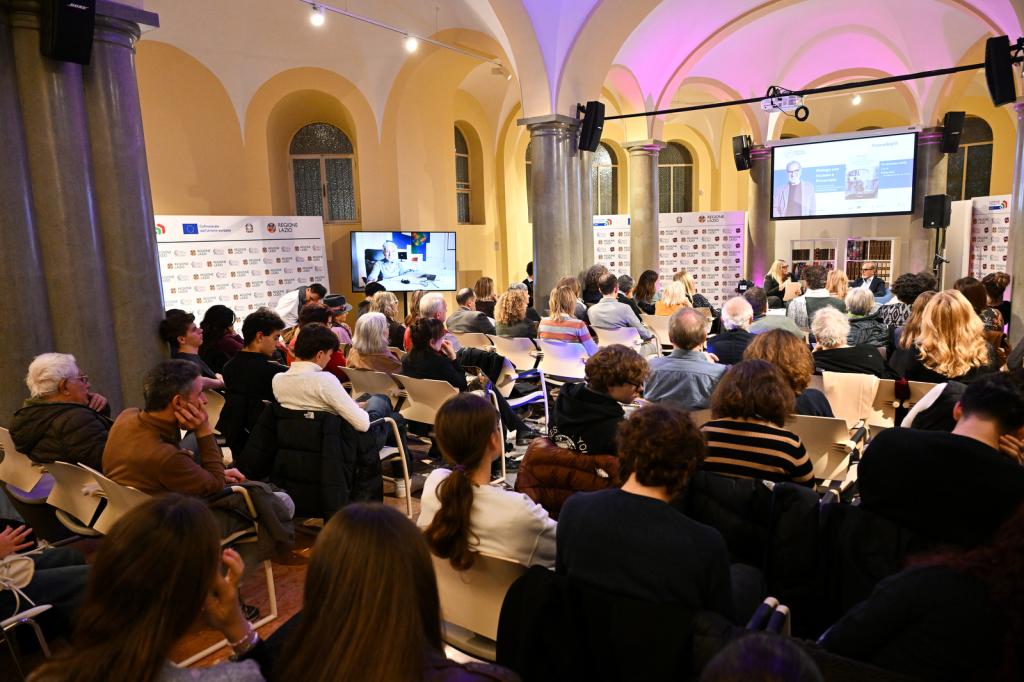
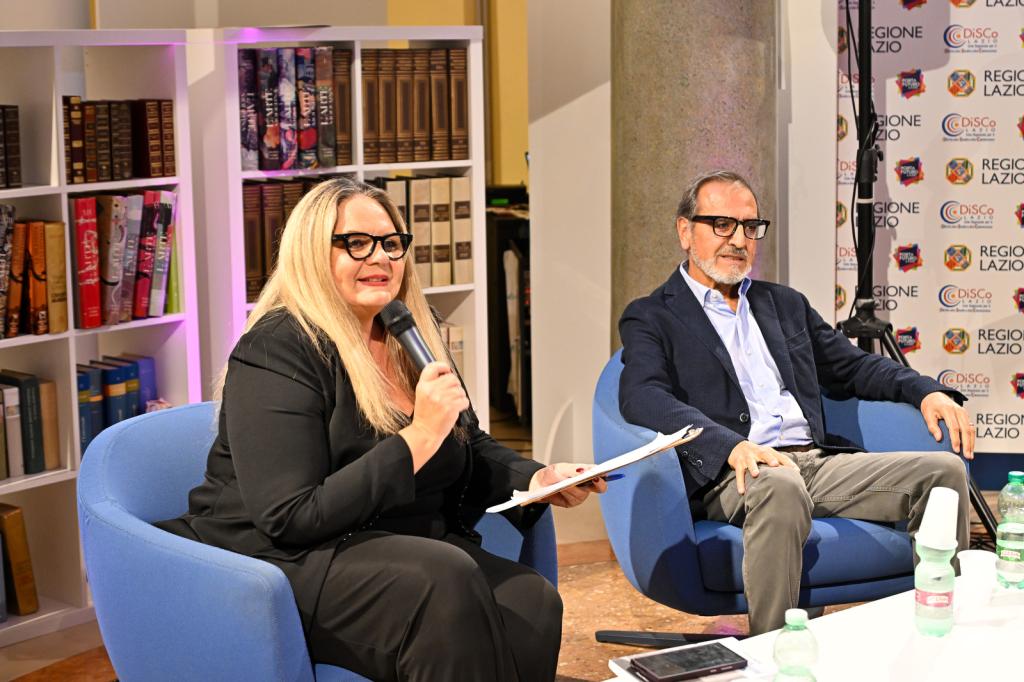
At the Moby Dick cultural centre in Rome, Alfonso Molina speaks of exile, dreams and the pursuit of happiness. An evening of emotions, music and dialogue with young people
“I had to erase the word ‘nostalgia’.” It is one of the most poignant phrases with which Alfonso Molina described his experience of exile on Friday 13 November at the Moby Dick cultural centre in Rome. Leaving Chile after Pinochet’s coup, travelling through Argentina, arriving in Britain without knowing the language, starting afresh each time. To carry on, Alfonso had to learn to live with the distance and to recognise as home the place where he could continue to fulfil his dreams.
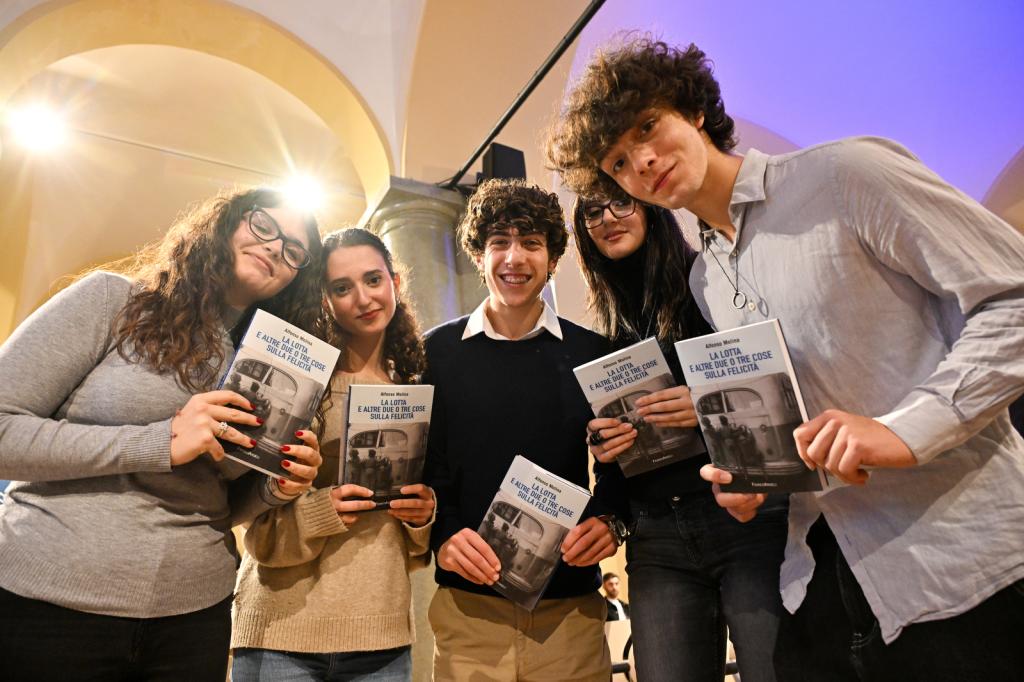
It was one of the most moving moments of the presentation of The Struggle and Two or Three Other Things About Happiness (FrancoAngeli, 2026), the autobiographical book by the co-founder and scientific director of the Fondazione Mondo Digitale. It was an event in which personal history intertwined with collective history, amidst family memories, difficult choices, pivotal encounters and questions about the meaning of life.
The conversation was led by the journalist Francesca Oliva, deputy director of Rai News, who has long-standing professional and personal ties to the Foundation. Francesca chose to enter the narrative on tiptoe, with the sensitivity of someone who knows how to listen. She allowed the memories to find their own space, punctuating the dialogue with questions, observations and subtle reminders that linked distant episodes and brought out their meaning. Her discreet presence facilitated even the most intimate moments, without detracting from their spontaneity.
The people who help us start afresh
Alfonso’s journey takes in Santiago, Buenos Aires, Rosario, Edinburgh and Rome. There is the fear and precariousness of exile, but also the solidarity of those who offer a home, help and an opportunity. There are memories of his father, who passed away when Alfonso was thirteen, and of his mother, a central figure in his upbringing. And there are his friends – what he considers a chosen family, built on deep bonds.
Great Britain offered him the chance to study, to devote himself to research and to build an academic career. But the path was far from straightforward. Alfonso also spoke of his setbacks, his moments of depression, and the difficulty of finding the resources to carry on. This culminated in his decision to leave the University of Edinburgh to devote himself, alongside Mirta Michilli, to establishing the Fondazione Mondo Digitale.
He described himself as a pragmatic idealist, capable of nurturing grand dreams and seeking ways to realise them every day. This conviction has run through his political experience, his scientific work and his commitment to education: putting his knowledge at the service of others, especially those who face the greatest obstacles in building their own future.
When young people ask the questions
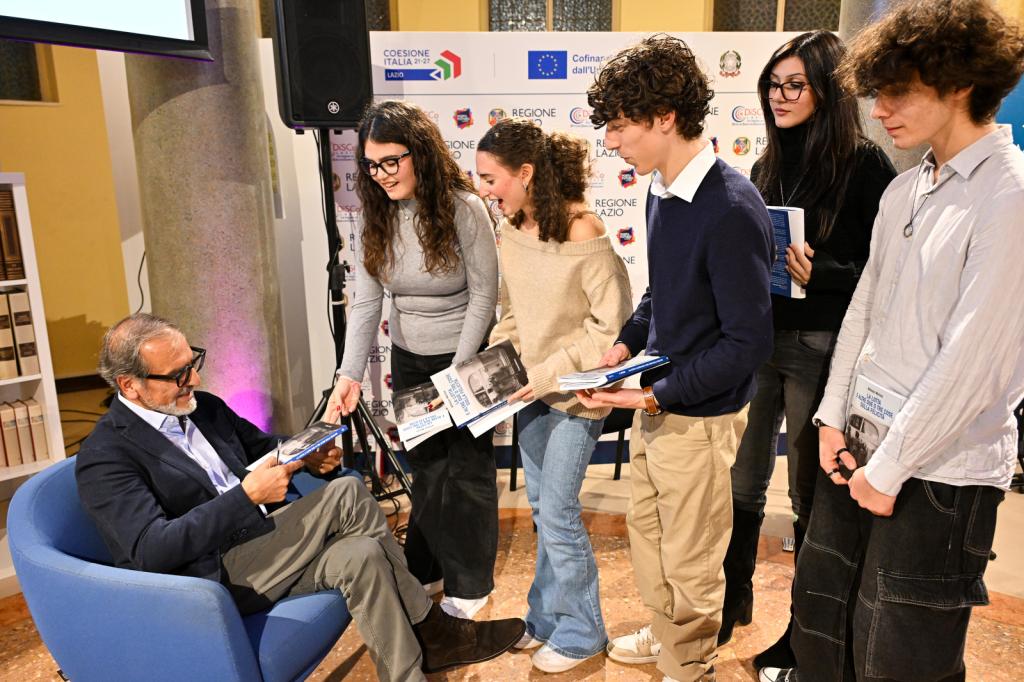
Then the conversation took a different turn. The floor was then given to pupils from the Vito Volterra High School in Ciampino and the Montessori High School, who had read the book and prepared their questions. And the story of a life became an opportunity to talk about their own. Gianmarco asked how one recognises one’s own path. David, who dreams of working in dubbing, wanted to know how to tackle obstacles and find the strength to start afresh. Viola said she had an idea of the person she’d like to become, though she didn’t yet know how to make that vision a reality. Natalia, who hopes to pursue a career in medicine and research, shared her fear of not living up to her own aspirations. And she asked a particularly poignant question: during his exile, in the most difficult moments, had Alfonso ever missed Chile, to the point of doubting his own dreams? It was precisely in reply to Natalia that Alfonso explained he had had to “erase the word ‘nostalgia’” in order to find the strength to carry on and imagine a new life. Finally, Gisella posed the question that runs through the entire book: what is happiness? Alfonso distinguished between sudden joy – the kind that even a goal scored by one’s favourite team can bring – and a happiness that is built up over time. It is the kind of happiness that allows you, looking back, to recognise a life consistent with your ideals, lived with others and also for others. He spoke of deep relationships, of friendship, of people who become points of reference and who, sometimes with just a single piece of advice, can change a life.
Towards the end of the meeting, Francesca Oliva turned the floor back to the pages of the book, reading a short passage. A few lines that encapsulate the essence of a journey marked by losses, new beginnings and constant transformations. “Here I am. I had left a world behind to find myself, the man who was waiting for me at the end of a cycle. The Earth’s crust spinning like an orange peel beneath my weary feet. From Santiago, my cities had become Edinburgh and Brussels. And soon Rome, for a new story, which I already felt belonged to me, and into which I would melt and find myself once more” (page 241). In those words, the thread that ran through the entire evening resurfaced: the possibility of starting afresh, of recognising oneself in change, and of building new senses of belonging without losing one’s own history.
Words, music, encounters
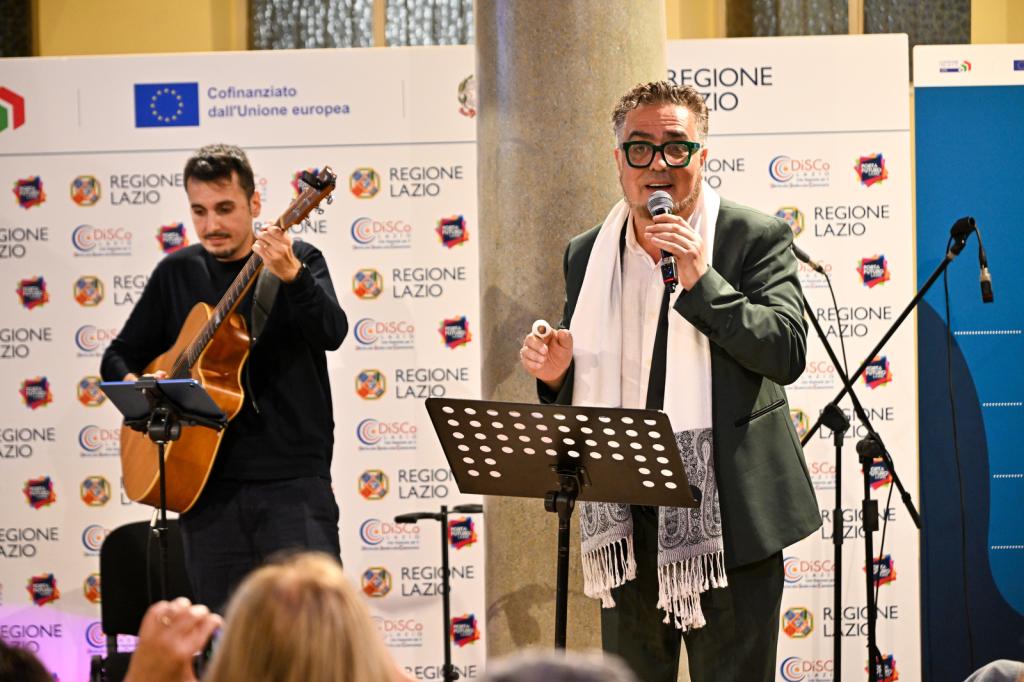
Accompanying the narrative was the music of Héctor “Titín” Molina, Alfonso’s brother, a philosopher, singer-songwriter and researcher into Chile’s indigenous cultures. His words and songs brought the sounds and memories of Chile back into the room, adding a familiar and emotional dimension to the conversation. The theme of change also resurfaced in the music, alongside that of the values which withstand life’s transformations.
Towards the end, Fabrizio Patriarca took the floor; he had accompanied Alfonso on the long journey of listening and crafting the book. He drew on Dante’s journey – one of the inspirations that guided the work on the book – to offer a reflection on the significance of encounters. Alfonso had spoken at length about the people who had helped him along his path. Patriarca invited the audience to consider the other perspective as well: just how much Alfonso had meant in the lives of the people he had met. Perhaps this is precisely the question that best captures the essence of the evening. For on the long journey from Santiago to Rome – through exile, intellectual inquiry and social commitment – happiness seems to have a great deal to do with the relationships we choose to build and with what we manage to leave behind in the lives of others.