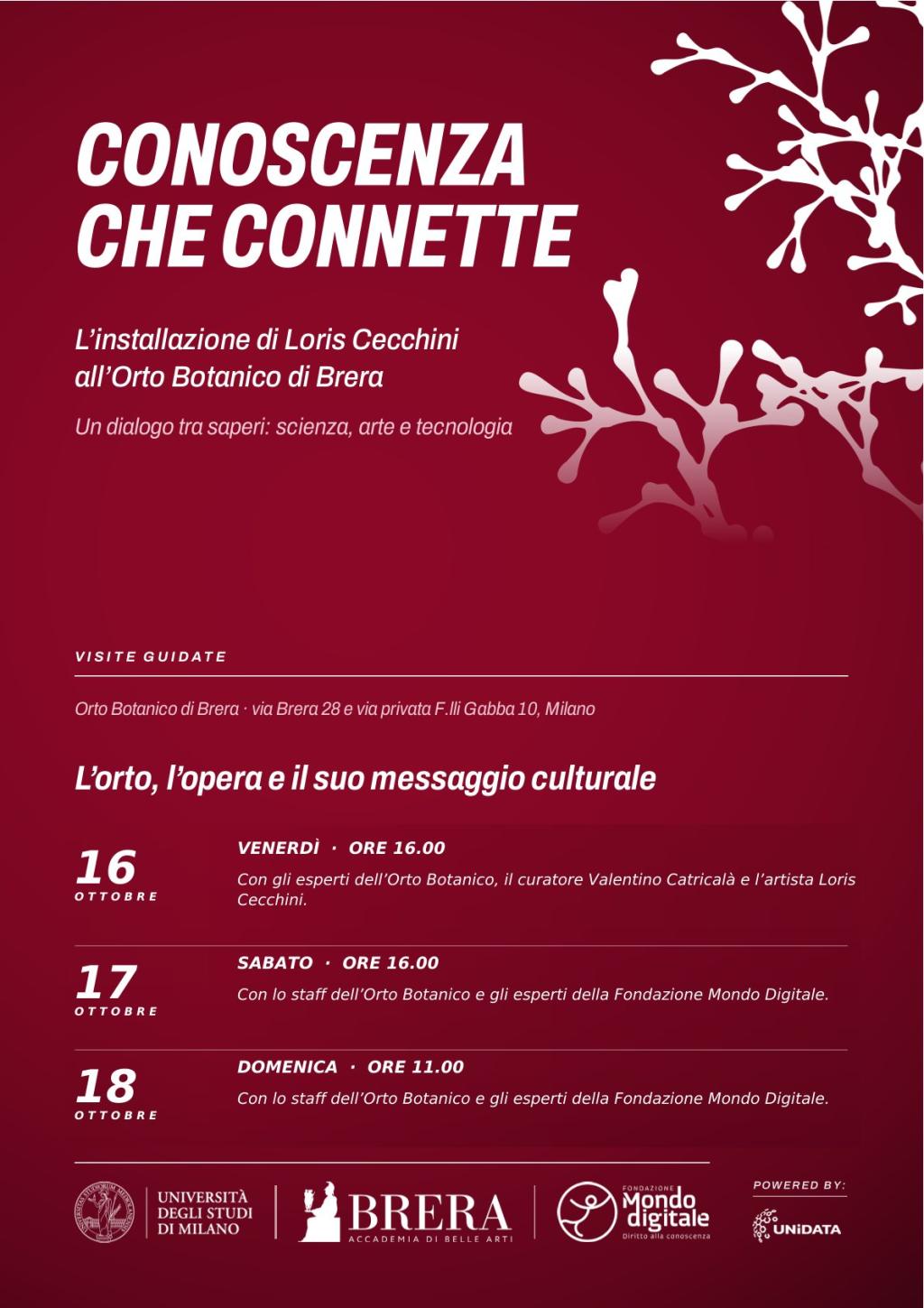
The company is trialling skills-based volunteering for the first time with the Fondazione Mondo Digitale
How are nature’s networks similar to digital ones? And what makes a connection truly meaningful?
These are some of the questions at the heart of the workshop “Invisible Connections: from nature’s networks to the technologies of the future”, which took place on 16 October and involved a Year 4 class from the Schiaparelli Gramsci school at the Brera Botanical Garden in Milan. The initiative stems from a collaboration between the Fondazione Mondo Digitale and Unidata, which, to mark the Foundation’s 25th anniversary, is launching its first corporate skills-based volunteering initiative.
The event forms part of the Knowledge that Connects programme, through which the Foundation is celebrating its anniversary with a journey through art, nature and innovation, from 15 to 18 October in Milan and from 21 to 25 October in Rome.
The invisible connections between nature and technology
The morning began with a visit to the sculptural installations by Loris Cecchini, followed by a workshop led by professionals from Unidata. During approximately 30 minutes of interactive discussion, the students explored the relationships between biological and digital networks, ranging from natural systems and human relationships to the Internet of Things (IoT), and from the neural networks of artificial intelligence to cybersecurity. It was an opportunity to approach complex technological concepts through a hands-on experience and to reflect on how seemingly different systems share principles of connection and interdependence [read the news article Between scientific research, art and social innovation].
Knowledge grows when it is shared
At the heart of the initiative lies the value of the professional skills made available to the younger generation. Through skills-based volunteering, Unidata employees share with students the knowledge and experience they have gained in their work, helping to create opportunities for learning and discussion. “Art, nature and technology are extremely interconnected,” observed Patrizio Pisani, Director of Innovation and Research at Unidata. Sharing one’s knowledge with students means taking part in a broader process, because “the entirety of human knowledge, the entirety of human intelligence, is founded on the transmission of prior knowledge”. This transfer of knowledge concerns not only technical skills, but also the way in which people learn to interpret and use technologies.
Paolo Bianchi, Head of Corporate Communications and a member of Unidata’s Board of Directors, drew attention to the significance of technological connections and the responsibility to guide young people in understanding them. Connections, he explained, are value-neutral: it is important to convey to young people how they are conceived, understood and experienced. Describing them in a natural setting allows us to trace them back to the very essence of nature and to attribute a meaning to them that goes beyond the technical and impersonal dimension.
Business expertise at the service of the community
It is also through these experiences that the value of collaboration between businesses and educational organisations takes shape: creating learning opportunities, introducing young people to technology and promoting a digitally literate culture. This approach is consistent with the Fondazione Mondo Digitale’s commitment to a democratic knowledge-based society, in which skills and opportunities for growth can be shared and become the community’s collective heritage.