

Ital.IA Lab for School: Lara Rollo explains how AI can support learning pathways
Let’s make the most of the summer break to look back at the experiences that have shaped the last school year and hear from teachers who approach innovation with curiosity, responsibility and a spirit of initiative. Lara Rollo, a primary school teacher and trainer at Ital.IA Lab for School, explains how artificial intelligence can help personalise teaching, support vulnerable pupils and offer new learning opportunities. On one condition: that teachers learn about it and fully embrace their role as authoritative guides in the digital world.
Lara Rollo, as well as being a trainer for the Fondazione Mondo Digitale, now teaches at the Velletri Sud Ovest comprehensive school, following a year spent at the Lazio Regional Education Office. In the classroom, she adopts innovative technological solutions with confidence and a spirit of initiative, approaching innovation through an interdisciplinary lens: she teaches Italian, maths and other subjects, often simultaneously and across different primary school classes. She is used to taking on challenges, experimenting alongside her pupils. After exploring the opportunities offered by coding and block-based programming, she decided to become actively involved in complex issues such as combating cyberbullying, and eventually became one of the teacher ambassadors for the Ital.IA Lab for School project.
A firm believer in the potential of AI in education, she frequently engages with upper secondary school teachers who attend the webinars organised by the Fondazione Mondo Digitale in partnership with Microsoft. Just a few weeks ago, at a meeting at the IC Primo Levi in Marino, where she was speaking as a trainer, she proposed practical activities to integrate AI and Microsoft tools into everyday teaching, addressing more than 70 secondary school teachers.
You are a pioneer in the field of innovation in schools; what was it like to move from programming to experimenting with artificial intelligence thanks to Ital.IA Lab?
As a teacher of all subjects, I find it very interesting and revolutionary to study and propose applications of AI and to discover, day by day, how it can be a great help in preparing daily lessons for any stage of schooling, but also in teaching older pupils not to settle for a passive and simplistic use of these tools.
We are no longer in the experimental phase of artificial intelligence; its use is growing even amongst teachers. What feedback have you received during your training sessions for Ital.IA Lab?
I must say that there is still a great deal of fear and mistrust, despite it having become a much-discussed topic in every field of activity. Whilst many primary school colleagues still seem unaware of what a huge revolution this is, and risk being left behind, the teachers I meet as a trainer are, on the other hand, very concerned: they know that pupils tend to over-rely on AI for their homework at home, and they also fear being replaced by devices. Finally, it is often pointed out to me that the tools respond in a very accommodating manner, flattering people.
Are these myths to be debunked?
In my training sessions, I urge teachers to familiarise themselves better with the tools so they can spot the most trivial uses, to understand what has been copied in its entirety and what, on the other hand, is the result of the pupils’ own efforts. And, as for the fear that teachers might lose their authority and central role, I always explain that any response from chatbots is heavily influenced by people’s requests, so it never disregards the human element represented by the initial question. Finally, I believe that AI can even remind us to be kinder and more considerate when responding. I don’t think chatbots pander to us, but rather that they ‘reward’ us when we ask the right questions or respond intelligently. It boosts our self-esteem!
How can we encourage a constructive use of AI among young people who, at home, are increasingly independent and free to use online tools?
I believe that we teachers must highlight the fallibility of AI and, consequently, the importance of cross-checking. We know full well, for example, that when mathematical questions are posed, the risk of error is very high. Intervening in this way has great educational value because a young person who uses artificial intelligence – even if only to make their life easier – demonstrates a strong desire to meet expectations and complete the tasks set for them. Let’s think of those who, in years gone by, used to copy off their classmate or hand in a blank exercise book. A young person who today, at home, looks up the answer to a question and perhaps even tries to adapt it based on their own knowledge, still demonstrates a desire for learning. Whereas in the past a young person with a learning disability or special educational needs might not have done their homework because of their difficulties, today they have far more opportunities to respond positively to a teacher’s request.
What concrete opportunities for growth and learning can AI actually offer to students facing challenges?
We must not focus solely on pupils with cognitive difficulties but, more generally, on supporting all young people. It is true that today there is an additional challenge compared to the past: the loneliness experienced within the family, the vulnerability and absence of a key adult figure – whether due to work commitments or, often, a misguided desire for their child’s independence. This is precisely why we teachers must be trained in the ethical use of AI and technology in general: within the family, there are no authoritative guides on digital matters; we need to fill this gap. Parents are often unaware that their children are already very familiar with artificial intelligence; they do not support them in their studies, convinced that this should be an activity carried out in solitude, and often presenting themselves as a friend rather than an authoritative and guiding figure.
In your experience, does the teaching community today welcome bans on the use of devices in the classroom?
Many teachers are relieved, it’s true. But, precisely because of this great freedom and autonomy young people have in the use and misuse of both mobile phones and AI in their own homes, I say we must seize this moment to educate ourselves and provide the utmost support. This is where a programme like Ital.IA Lab For School comes in which trains and equips teachers to take on that role as digital guides – a fundamental preparation for the pupils and their skills.
How do you suggest teachers use it?
There are many opportunities, both in the lesson preparation phase and for the next stage. And without ever calling into question the teacher’s professionalism and autonomy. We can simplify it as follows:
Personalisation. Thanks to AI, we can create a lesson perfectly tailored to the class’s needs, adapting the content to address any learning difficulties, with much more varied ideas than those found in textbooks – which we can certainly integrate.
Hands-on learning. We can show pupils how, starting from a single source (a text, for example), they can create a wide range of outputs, with truly varied tones and levels of depth.
Interactivity. We can generate a wide variety of worksheets based on the feedback we provide.Multimodality. From a classic text, I can generate a song, a video or a concept map. We can develop tests to assess knowledge, at increasing levels of complexity across various areas.Assessment. We can create assessment grids based on the knowledge acquired and alternative exercises to explore critical points in greater depth.Non-judgemental approach. The class’s difficulties are not penalised but become an opportunity to gain insights for improvement.
How do you picture a young person in their room turning to a chatbot for help with their studies, often whilst on their own?
I imagine our young people turning to AI for help with comprehension, if needed, or perhaps to discuss topics they have just studied. I imagine a tool could offer tests, questions that simulate a class test, or perhaps help with organising their study time. All without calling into question the students’ ability to creatively and critically rework the results they obtain.
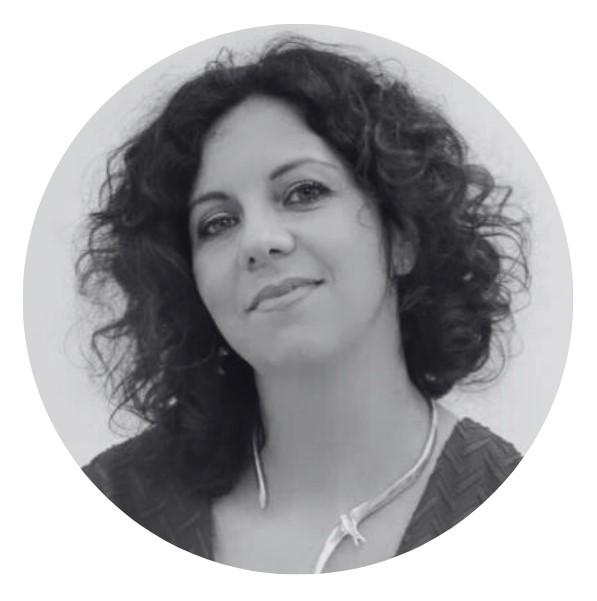 Interview by Onelia Onorati, press office of the Fondazione Mondo Digitale.


