

Barbara Avella reflects on a year of AI, training and new teaching challenges with Ital.IA Lab for School
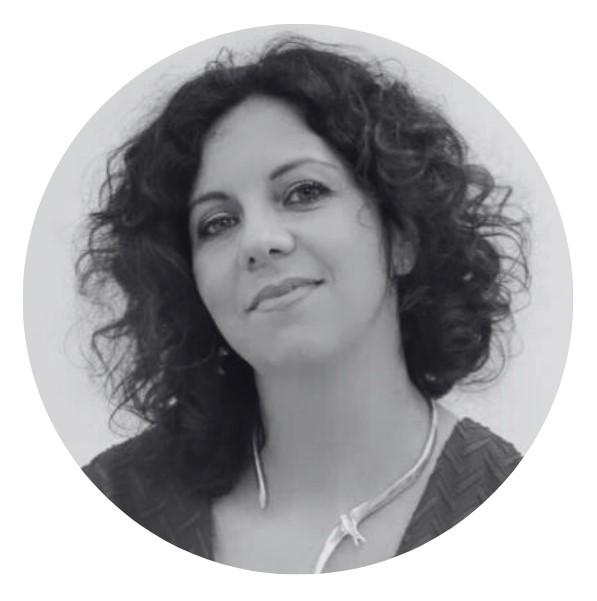
Let’s make the most of the summer break to look back on the experiences that have shaped the last school year and give a voice to some of the teachers who have navigated it with passion, curiosity and a spirit of inquiry. Through their accounts, we retrace the experiments, questions and lessons learnt that arose from engaging with artificial intelligence and a school system undergoing constant transformation. Let’s begin with Barbara Avella, a primary school teacher of STEM subjects and a trainer for the Ital.IA Lab for School project, who has been exploring the potential of technology in education with curiosity and rigour for years.
Barbara Avella teaches at the Antonio Nuzzo primary school, part of the Via Casal Bianco comprehensive school in Rome, led by Angela Minerva. She is a pioneer in the use of technology in teaching. Working with Fondazione Mondo Digitale, she was more than enthusiastic about taking part as a trainer in the Ital.IA for School project.
“I like to ride the wave of technology, experimenting alongside my colleagues and engaging with ever-changing content. Digital technology is constantly evolving and I like to keep up to date,” she comments. It all began with the first courses on artificial intelligence, which introduced Barbara Avella to the initial applications in education, such as music-based games. “I haven’t looked back since and have continued to experiment. I undertook an online university course and delved into the inner workings of AI, exploring some more niche platforms for research and article classification. I was struck by the concept of neural networks, which I consider a truly intriguing ‘black box’.” This interest in artificial intelligence has taken her a long way: “Thanks to a colleague, with whom I often exchange ideas, I learnt about and joined the Movement for Artificial Intelligence in Schools (Mias). She also told me about a call for papers from MIT, one of the world’s leading universities for the study and debate of scientific subjects. I had been working on developing a digital Socratic tutor using AI to support the understanding and solving of mathematical problems. I submitted the paper and was invited to present it at MIT in July 2025. On that occasion, I had the chance to learn about international experiences, which were on a very different level from our experience in Italy, which is largely focused on data protection.”
In the first Ital.IA Lab For School webinar, she addressed the topic of prompting: the webinar was titled ‘Prompt crafting for teaching: practical strategies for effective dialogue with AI’. In January, however, the training focused on AI biases that perpetuate gender stereotypes. “We’ve also seen a major evolution in these areas. Compared to just a few months ago, the same prompt now generates different outputs. Whilst previously certain professions were depicted almost exclusively in masculine terms, we’re now seeing the first female representations emerge.” “When exploring the use of Copilot, I provided participants with a series of exercises on effective commands to help prepare lessons and to highlight the gender biases present in the tools. It was interesting to test the models to see how they respond to these representations.”
Teachers’ interest today is tempered by the tool’s practicality, in line with the MIM’s guidelines. “At the Ital.IA Lab meetings, some people were interested in the tutor and how it analyses the texts produced by the pupils – a programmable agent suitable for any subject. The tutor helps draw out the pupils’ knowledge and never takes a judgemental stance; it stays close to their language because it is digital and interactive.” Today, AI can adapt perfectly to pupils’ ages and their level of knowledge. Furthermore, there is always the option to protect their identity and sensitive data.
“Personally, I recommend always downloading the AI’s output on pupils’ work and analysing it carefully to understand how they reasoned and what their strengths and weaknesses were on a particular topic. Some colleagues view AI as alien to teaching, perhaps failing to realise how deeply rooted it already is in everyday life, and imagine they can keep it out of the classroom. This is somewhat similar to the attitude towards technology in general. And unfortunately, this is also reflected in the varying opportunities available to pupils. Within the same school, there are classes that have experimented with digital working methods, using shared platforms that also bridge geographical distances, and other classes that have not had these opportunities. Among the teachers, there is a bit of everything: the enthusiasts who, however, do not fully understand how AI works and use it passively; the sceptics; and, finally, those who ask questions.”
 Interview by Onelia Onorati, press office of the Fondazione Mondo Digitale.


